Pet Clipper Assortment Planning for Grooming Salons and Distributors
Grooming salons and distributors need complementary products, not a group of products that all make the same promise.
A well-planned assortment gives each item a role: a main full-body clipper, a detail trimmer, a low-noise option, a heavy-duty option or a kit format. The buyer’s task is to decide which roles are needed for the intended market and then shortlist models using complete, model-specific information.
Updated 2026-09-06 · 6 min read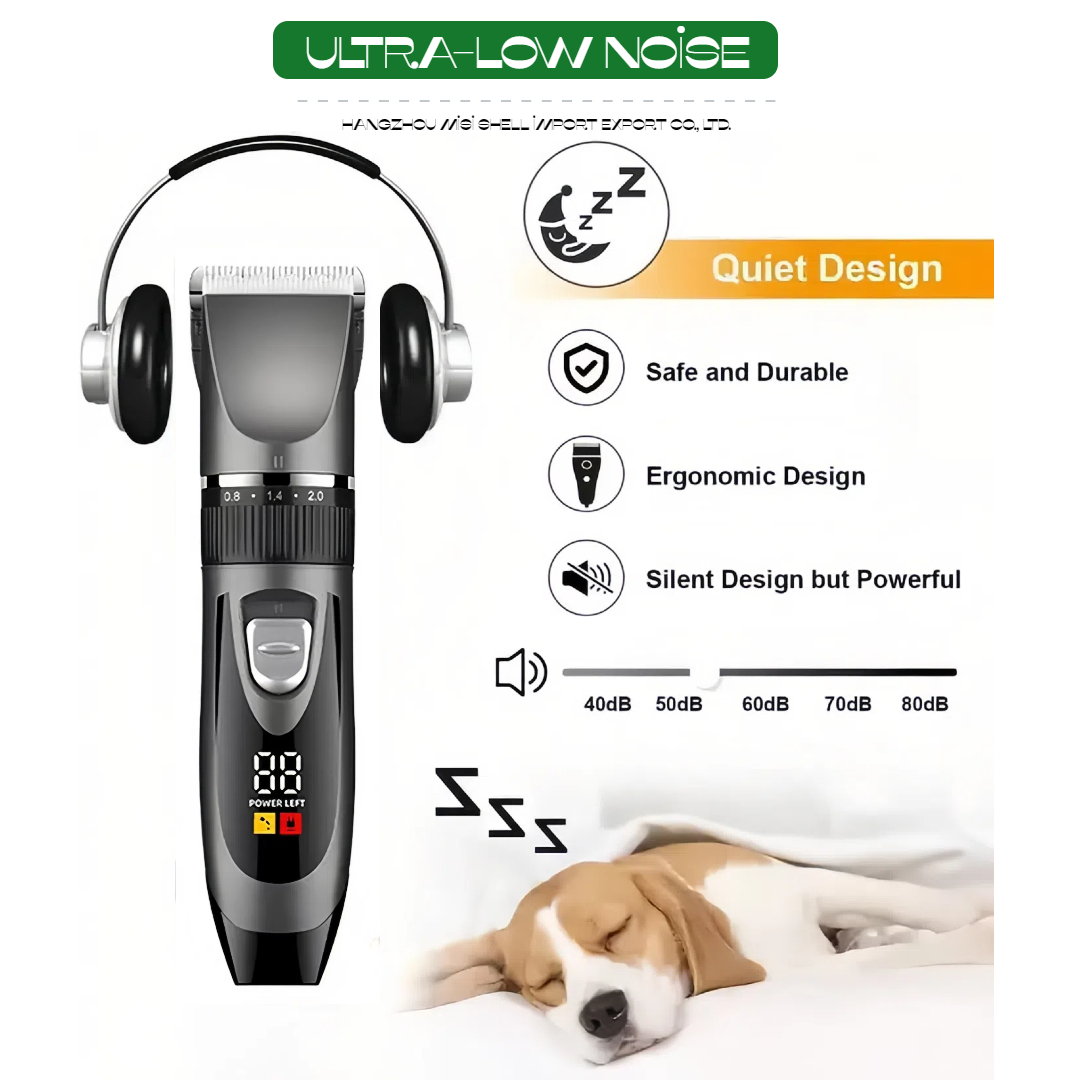
Plan Roles Before Comparing Models
Start with the use cases the assortment must cover.
Full-Body Clipper
A full-body option can be the main product for broad grooming tasks. The buyer should define the expected user, product position and required accessory scope.
Detail Trimmer
A detail trimmer can complement the main clipper by serving a precision or finishing role. It should have a distinct purpose within the assortment.
Low-Noise Option
A low-noise option can be considered for buyers serving customers who value calm-grooming positioning. Buyers should compare model information and sample feedback rather than assuming a generic dB claim applies to every product.
Heavy-Duty Option
A heavy-duty option may be relevant for professional or demanding grooming use cases. The buyer should confirm the precise model configuration and intended product role.
Grooming Kit
A kit can combine products and accessories into a retail-ready offer when the bundle has a defined customer purpose.
Do Not Shortlist Models by RPM or dB Alone
Headline RPM, dB or other numerical specifications may be useful only when they are verified for the exact model and configuration. They do not replace a broader sourcing review. A stronger shortlist considers:
- Intended grooming task
- Product role in the assortment
- Accessory configuration
- Product handling and user information
- Retail or salon positioning
- Sample-review questions
- Packaging and documentation needs
From Roles to a Model Shortlist
After roles are defined, use the product range to shortlist candidates. The objective is to compare each product against the same buyer brief.
Buyer Checklist
- Define salon or distribution customer needs
- Assign a role to each proposed product
- Separate full-body, detail, low-noise, heavy-duty and kit needs
- Avoid role duplication
- Compare full model information, not only headline numbers
- Record accessory, packaging and documentation questions
- Use sample review to refine the shortlist
Related Resources
Assortment Planning Matrix
| Role | What it contributes | Buyer question |
|---|---|---|
| Full-body clipper | Main grooming role | Is it appropriate for the intended work and customer? |
| Detail trimmer | Precision or finishing role | Does it complement rather than duplicate the main product? |
| Low-noise option | Calm-grooming positioning | What model-specific information supports the position? |
| Heavy-duty option | Demanding-use positioning | Is the role justified by the intended market? |
| Kit | Combined retail offer | Do the product and accessories form one clear offer? |
FAQ
Should every salon assortment include every product role?
No. The right assortment depends on the intended customer, sales channel and grooming tasks it needs to cover.
How should a distributor compare low-noise products?
Use model-specific information, intended product role and sample feedback. Avoid treating one generic sound-level claim as proof for all products.
Is a heavy-duty model always needed?
Not necessarily. Add it only when it has a defined customer or professional-use role in the assortment.
Can a kit replace standalone products?
A kit can be a useful offer, but it does not automatically replace standalone products. The buyer should decide which format fits the sales channel.